
If you’re staring at the calendar thinking, “It’s already December… did I miss my window to winterize?”, the answer is no. You’re fine. You may have to hustle a bit, but plenty of RV owners wait until the last minute every year. What matters is taking care of the essentials so your rig doesn’t get cracked lines, busted fittings, or a swampy smell when you open it back up in the spring.
Here’s what you should focus on right now, without getting lost in the noise.
Steps to Winterize Your RV
1. Drain the water system completely
This is the one thing you can’t skip.
Empty the fresh tank, the gray tank, and the black tank. Then open your low-point drains and let gravity do its job. If you’ve already had a couple of cold nights, don’t panic. Light freezes usually don’t destroy anything unless the water sat pressurized in a tight space.
Once everything is drained, choose your method:
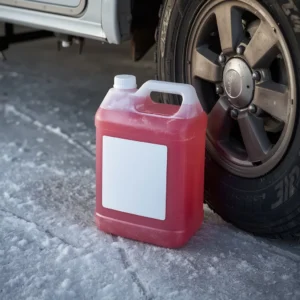
- RV antifreeze through the system
Best for colder states and unpredictable winters. - Compressed air blowout
Works fine in milder areas or if the rig is stored indoors.
Either method works. Just stay consistent and don’t mix them “a little of both.”
2. Protect the exterior from freeze–thaw damage
December cold loves to sneak into small cracks. Check your roof, vents, windows, and seals. Anything soft, loose, or gapped should get touched up with lap sealant or a quick patch. This takes 10 minutes and can save you from dealing with water damage later.
3. Empty the inside of anything that can mold
Late-winter moisture is the culprit, not the cold. Pull out food, towels, bedding, and anything that absorbs moisture. Leave the fridge and freezer cracked open so you don’t return to a science experiment.
If your RV goes near trees, fences, or tall grass, put a couple of rodent deterrent packs inside. December is prime “mouse is looking for a hotel” season.
4. Deal with the batteries
If your RV will sit unused for more than a couple of weeks, disconnect the batteries or put them on a tender. A dead battery in February is a headache you don’t need.
5. Don’t forget propane safety
Turn off propane at the tank. If your RV has older lines, December is the right time to check valves and hoses for small leaks. Cold weather can stiffen rubber, and problems usually show up right after a freeze.
6. Cover the basics, skip the stress
You don’t need to winterize like you’re prepping for the Arctic unless you live in one.
You do need to:
- Remove all water from the system
- Protect against leaks
- Clean out items that can mildew
- Keep pests out
- Secure power and propane
That’s it. Late-season winterizing isn’t about perfection. It’s about preventing damage that costs you time and money in the spring.
Bottom line
December isn’t too late to winterize your RV. You haven’t missed anything major. If you knock out these basics now, your RV will ride out the winter just fine, and you’ll be ready to hit the road when it warms up again.

Earl Nellder
Pre-Departure Checklist for RV Travelers Interior Tasks: Secure Loose Items: Stow away any items on countertops, secure cabinet doors, and ensure all appliances are turned off. Close Windows and Vents: Ensure all windows, roof vents, and skylights are closed to prevent dust and debris from entering. Check Appliances: Turn off the water heater and water pump, and ensure the refrigerator is set to the appropriate mode for travel. Exterior Tasks: Disconnect Utilities: Safely disconnect and store the sewer hose, water hose, and electrical cords. Retract Awnings and Slide-Outs: Ensure all awnings are retracted and slide-outs are fully closed. Raise Stabilizers and Remove Chocks: Retract stabilizing jacks and remove wheel chocks, storing them appropriately. Inspect the Campsite: Perform a final walk-around to check for any forgotten items or potential hazards. For a comprehensive departure checklist, consider resources like the Printable RV Breakdown Checklist. Additionally, services such as Housecall RV Service offer mobile assistance for RV maintenance and repairs, ensuring your vehicle remains in top condition. For more tips and community discussions on RV living, visit Talk of RV. By adhering to this checklist and utilizing available resources, you can ensure a safe and efficient departure from any RV park.